

How to Manage Wandering Behaviors in Dementia?
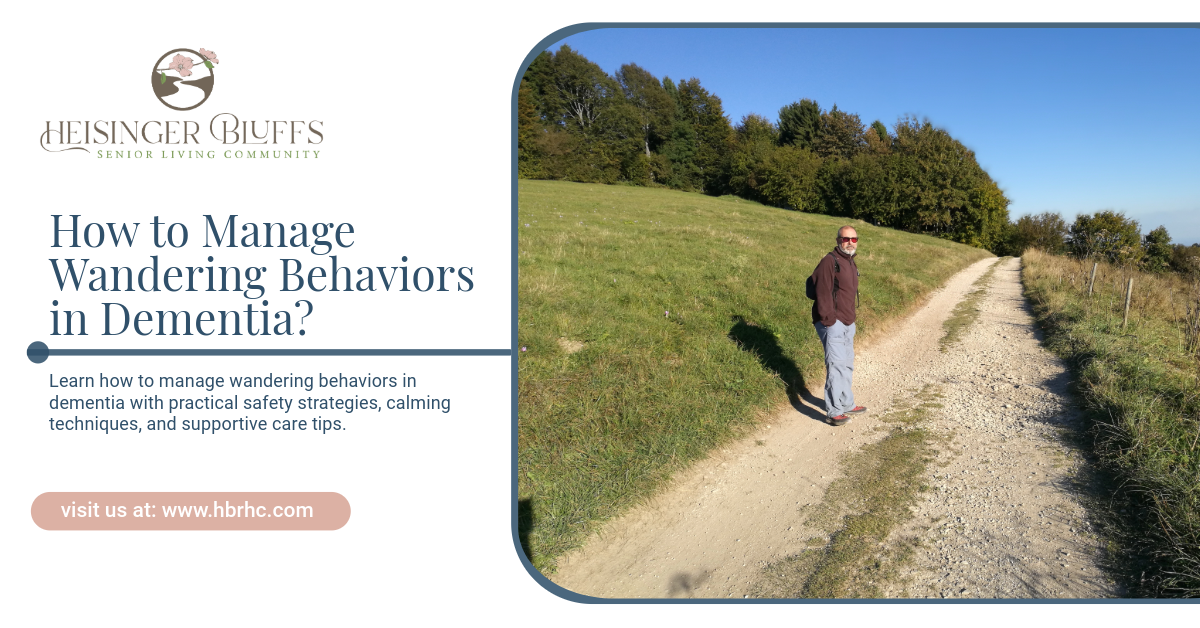
Wandering is a common behavior in people with dementia and can pose serious safety risks. Understanding why it happens and how to manage it can bring peace of mind to caregivers.
- Identify triggers: Wandering may occur due to boredom, restlessness, or unmet needs such as hunger or the urge to use the restroom. Recognizing patterns helps prevent episodes.
- Create a safe environment: Use door alarms, secure locks, and motion sensors to reduce risks. Keep living spaces clutter-free to avoid falls.
- Provide structured routines: Consistent daily schedules reduce confusion and anxiety, lowering the likelihood of wandering.
- Encourage physical activity: Gentle exercise and engaging activities can help release excess energy.
- Offer reassurance: Calm communication and redirection often ease agitation that leads to wandering.
At Heisinger Bluffs, our memory care program provides a secure, supportive environment where residents with dementia receive personalized care and protection.
Frequently Asked Questions
Why do dementia patients wander?
Wandering often stems from confusion, restlessness, or unmet needs.
How can I keep a dementia patient safe from wandering?
Use door alarms, secure locks, and structured routines.
When should I seek professional help?
If wandering becomes frequent or dangerous, consult a memory care specialist.
Sources:
- https://www.alz.org/help-support/caregiving/stages-behaviors/wandering
- https://www.upmc.com/services/seniors/resources-for-caregivers/wandering-tendencies-patients-alzheimers-dementia



Share This Article
You May Also Like To Read

Build a senior living visiting routine that works for your family, including practical tips on timing, frequency, and meaningful visits with an aging loved one.

Are senior living costs tax deductible? Learn which assisted living, memory care, and nursing home expenses qualify under IRS rules, and how to claim them.

Learn how to set caregiving boundaries without guilt. Practical, compassionate strategies for family caregivers who are stretched thin and running on empty.

Explore practical stress management tips for senior caregivers. Learn how to protect your health while caring for an aging loved one.

Practical spring cleaning tips for seniors to refresh your home safely, reduce fall risks, and tackle clutter without exhausting yourself in the process.

Discover gentle mindfulness practices for family caregivers to ease stress, prevent burnout, and find calm in the middle of caring for someone you love.